Signs a Tree Near Your House Needs an Arborist's Look
Most trees near a house are fine, but a handful of warning signs are worth a closer look before a storm tests them.
October 16, 2026 · 4 min read
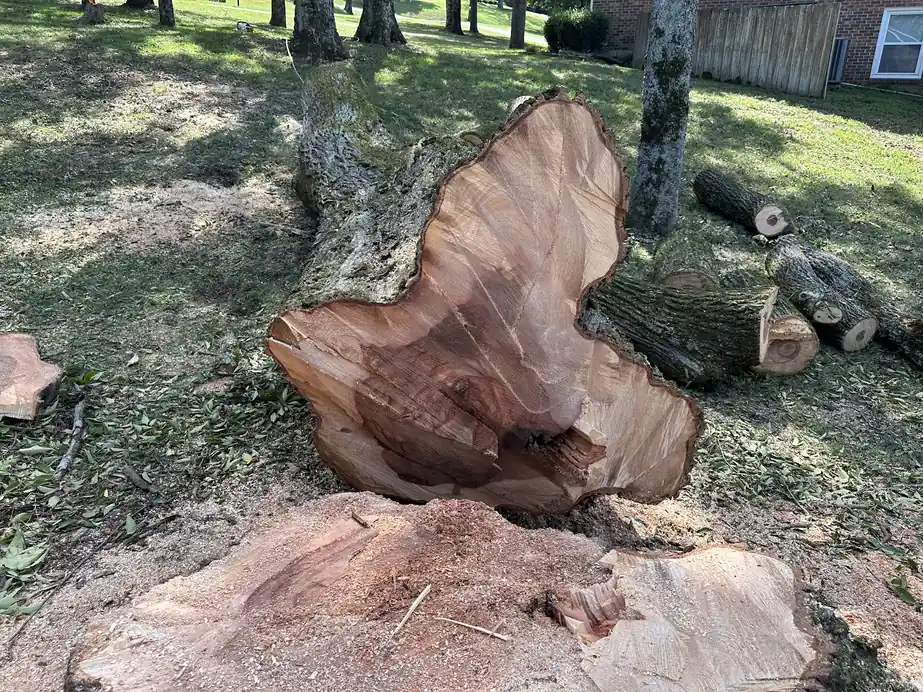
Most trees near a house never cause anyone a problem. They shade the porch, hold the soil, and get a little taller every year. A few of them are carrying trouble that has been building for a long time, and the first time the homeowner notices is when a limb is on the roof or the fence.
You don't need training to catch the early signs. You need to look at the tree on purpose, from a few sides, a couple of times a year. Here is what to look for and what each sign usually points to.
A lean that is new or getting worse
Plenty of trees lean and are perfectly stable. A tree that grew toward a gap in the canopy decades ago and has leaned the same way ever since has usually built extra wood to hold itself up. The lean to worry about is the one that changed. Look for soil heaved up on one side of the trunk, a crescent-shaped gap opening in the turf on the other, or a trunk that simply sits differently than it did in last summer's photos.
Check again after a long soaking rain or a windstorm. A tree that has moved is a tree whose roots let go of something. A lean toward your house, driveway or a power line raises the stakes, because the same lean that is harmless over an empty field is a real problem over a roof.
Cracks and weak joints where branches meet
Look at the places where a trunk splits into two main stems of similar size. A tight V-shaped fork with bark pinched into the joint is weaker than a rounded U-shaped fork where the wood has grown together. Bark trapped in a V acts like a wedge, and over the years the two stems can pull against each other until the joint splits.
A visible crack through a fork, a seam running down the trunk, or a large limb that has begun to sag deserves a call, not a wait-and-see.
Deadwood in the crown
In midsummer, compare your tree to the ones around it. Bare limbs with no leaves, peeling bark or a dead top while the neighbors are fully green are worth noting. In winter, the same branches will have no buds at the tips, and the twigs snap crisply instead of bending.
Dead wood is brittle, and it can drop on a calm day with no wind at all. A little is normal in an older tree. A lot of it, or a crown that is thinning from the top down, usually means the tree is stressed somewhere below, in the roots or the trunk. The dead branches are the symptom, not the cause.
Fungus and soft spots at the base
Mushrooms or shelf-like brackets growing from the trunk or the base of the tree can mean the wood inside is decaying. Not every mushroom in a lawn is a warning, because many grow from buried mulch or old roots and mean nothing for the tree. Brackets growing out of the trunk itself are a different matter.
Other things to notice are a cavity in the trunk, a hollow sound when you knock on it, bark that is loose or missing in a patch, and wood that feels soft. A hollow tree is not automatically doomed, and some stand for decades. The real question is how much sound wood is left to carry the load, and that takes an inspection.
Roots that are lifting, cut or buried
The roots are where a big tree is held to the ground, and they are the part you can't see. Watch for soil mounded up on one side, cracks in a driveway or walk that keep widening, and roots lifting a section of lawn. Also think back over recent yard work. A utility trench, a new patio or fill dirt piled around the trunk can all injure roots, and the damage may take years to show up in the crown.
What a certified arborist looks at
An inspection is not a quick glance up at the leaves. A certified arborist walks the whole tree and its surroundings, and the checklist usually covers these things.
- Overall lean, and whether the soil around the roots has moved
- The main forks and the large limbs that hang over buildings
- Deadwood and the general condition of the crown
- Decay at the base and in the trunk, and how much sound wood remains
- What the tree could hit if it failed, such as the house, a shed, a fence, a driveway or a line
That last item matters more than people expect. Risk is not only how likely a tree is to fail. It is also what stands in the way when it does. A weak tree in the back corner of a big lot is a different job than the same tree beside your bedroom wall.
What happens after the look
Plenty of inspections end with good news: the tree is sound, leave it alone, and look again next year. Others end with targeted pruning to take weight off a long limb or clear deadwood, or with a plan to keep watching one specific problem. When a tree can't be made safe and it is close to something that matters, removal is the honest answer, and a good arborist will tell you so and show you why.
If one of these signs sounds like a tree in your yard, Quality First Tree Service in Columbia offers certified arborist inspections and free estimates, and follows up within one business day. You can reach them at (931) 374-8450.
Quality First Tree Service, (931) 374-8450
Call (931) 374-8450More articles
A Storm Dropped a Limb or a Tree: What to Do First
The first hour after a storm is about not getting hurt, and most of the work is waiting for the right people.
Pruning vs. Topping: Why Cutting a Tree Back Hard Backfires
A tree that has gotten too big needs a thoughtful trim, and chopping the top off is the opposite of that.