Stump Grinding or Leaving the Stump: What Is Better for Your Yard?
Once the tree is down, the stump is the part people put off, and it is worth knowing what it costs you to wait.
October 16, 2026 · 4 min read
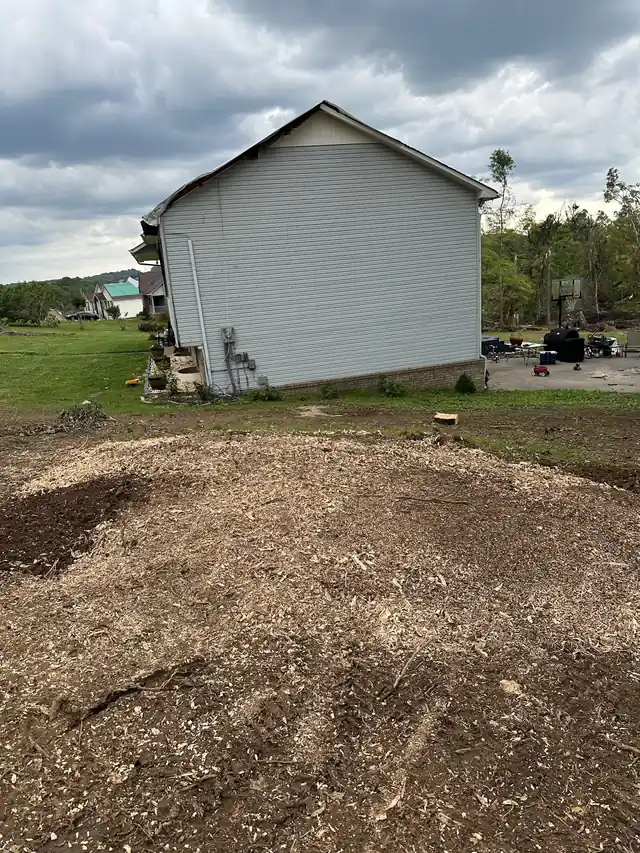
When a tree comes down, the stump stays behind, and plenty of homeowners decide they will deal with it later. Later can turn into years. The stump sits in the lawn, the mower dodges it, the kids jump off it, and eventually it becomes part of the yard's furniture. That is fine for some stumps and not for others. Here is how to decide.
The hazards of leaving a stump
The simplest problem is tripping and mowing. A stump cut low in tall grass is easy to miss, and it is a hard thing to hit with a mower blade or a foot. If children play in the yard, or if you have older family members who walk it, a stump is a hazard you chose to keep.
A stump also takes up space. It is a spot where you can't plant, can't mow cleanly, and can't put a fence post, a garden bed or a patio. If the plan for the yard includes any of those, the stump is already in the way.
Decay, pests and fungus
A stump is a big piece of wood in contact with the soil, and wood in contact with the soil is going to rot. As it does, it can draw things you would rather not host. Decaying wood can attract carpenter ants, termites and other wood-feeding insects, and it can grow fungus and mushrooms. Whether those insects move on to the house depends on your property, but a rotting stump close to the foundation is a poor neighbor.
Rot also takes time. A large stump can sit for many years while it slowly breaks down, so waiting for nature to take care of it is a long wait.
Regrowth from stumps and roots
Many trees, when cut, don't give up. The stump and the roots can send up sprouts, sometimes as shoots from the stump, sometimes as suckers popping up in the lawn several feet away. You cut them, they come back. Grinding removes the stump, and because it takes out the living wood at the top of the root system, it usually stops the stump itself from sprouting. Some species may still send up a few suckers from remaining roots for a while, and those can be trimmed off.
What stump grinding does
A stump grinder is a machine with a spinning wheel of hardened teeth. The operator sweeps it back and forth across the stump, and the wheel chews the wood into chips, working down a little at a time. The grinder goes below the surface, usually a few inches under the soil line, and the stump and the largest root flare near it are reduced to chips and loose dirt.
The chips stay in the hole. They can be raked out and used as mulch around other plantings or hauled away, and the hole can be filled with topsoil and seeded or sodded. A properly finished grind leaves a patch of loose soil instead of a lump of wood.
What grinding below grade allows
- Lawn that you can mow straight across without steering around anything
- A garden bed or a planting on the same spot, once the area is filled with fresh soil
- A fence post, a patio or a walkway where the stump used to be
- A new tree nearby, set far enough from the old stump position and planted in clean soil
Tell the crew what you plan to put there. A stump that will become lawn can be ground shallower than one that will become a garden bed or a new tree, and knowing the plan lets the operator grind to the depth that actually serves you.
What grinding does not do
Grinding takes out the stump and the roots near the trunk. It doesn't dig up the whole root system, and the rest of the roots stay in the ground and rot away slowly over time. For nearly every home project that is fine, but it is worth knowing before you plan something that needs the entire root mass gone, like a deep foundation or a large structure on that exact spot.
Grinding also needs a clear picture of what is underground. Irrigation lines, septic components, buried electric and gas lines, and drains can all be in the way. Have underground utilities marked through Tennessee's 811 service before any work begins, and show the crew anything private that you know about, like sprinkler lines or a septic tank.
When leaving a stump is fine
Not every stump needs to go. A stump at the back edge of a wooded lot, away from walkways and mowing, can simply be left to decay. Some homeowners like a tall stump turned into a planter or a seat. If the stump is out of the way, you aren't going to build anything there, and you don't mind watching it rot, leaving it alone is also an honest option.
In a mowed lawn, near the house, beside a driveway, or anywhere that people walk, it is usually worth having it ground.
Quality First Tree Service handles stump grinding alongside tree removal and trimming, so the stump can be dealt with in the same visit as the tree. If you have one in your yard, call (931) 374-8450 for a free estimate and tell them what you want the spot to become.
Quality First Tree Service, (931) 374-8450
Call (931) 374-8450More articles
Signs a Tree Near Your House Needs an Arborist's Look
Most trees near a house are fine, but a handful of warning signs are worth a closer look before a storm tests them.
A Storm Dropped a Limb or a Tree: What to Do First
The first hour after a storm is about not getting hurt, and most of the work is waiting for the right people.